

Cracked Heels: More Than Just Dry Skin
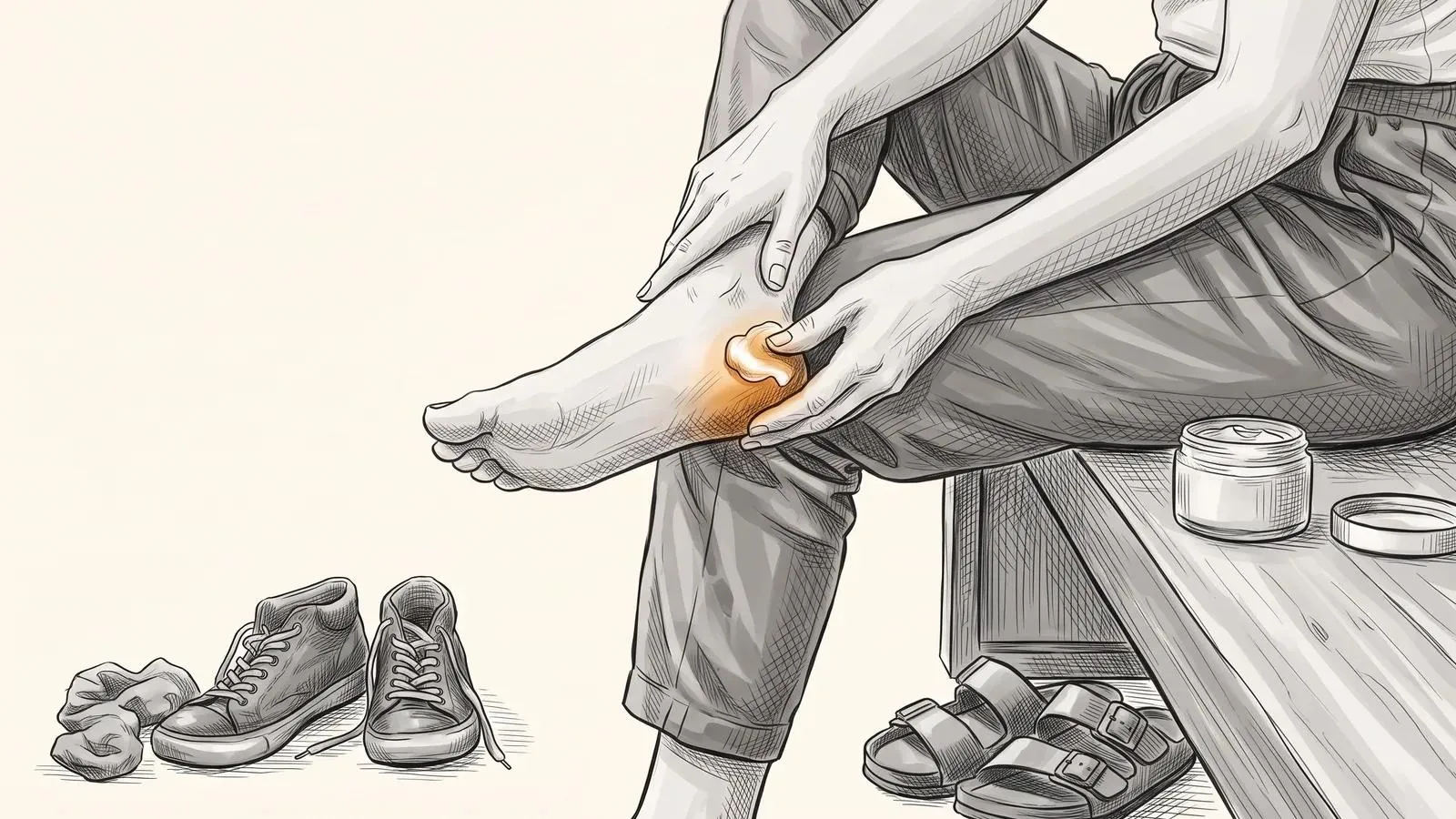
A small crack around your heel can become painful surprisingly quickly. What begins as rough, dry skin may eventually split deeply enough to sting, bleed or make walking uncomfortable.
At Masterton Foot Clinic, we often see patients just before summer, when they are thinking about getting their feet out of closed shoes, and again during or after summer when their heels have become dry.
Why Do Heels Crack?
Dry, thickened skin around the heel is less flexible. When you stand, the padding beneath your heel spreads sideways, placing tension on that stiff rim of skin. If it cannot stretch enough, it may split.
Prolonged standing, open-backed footwear and increased pressure through the heel can contribute. Skin conditions and some medical conditions may also play a part.
What Can You Do at Home?
- Apply a suitable foot moisturiser consistently.
- Consider a urea-based cream to hydrate and soften thickened skin.
- Choose footwear that cushions and supports the heel.
- Avoid picking, cutting or aggressively filing the skin.
The right cream depends on your skin. Stronger products may help thicker callus but can irritate or sting in open cracks. Ask for advice if you are unsure.
Does Removing the Hard Skin Hurt?
This is a common question, and in our experience, careful removal very rarely hurts.
We use sharp surgical blades to precisely reduce the outer layers of hard, dead skin. These layers do not contain nerves, so most patients feel little to no pain. An open crack or the living tissue beneath it may be sensitive, and we adjust our approach accordingly.
If the skin has been particularly thick for a long time, we may recommend reducing it over a couple of visits. This can make the transition from a very hard heel to softer, more flexible skin more comfortable.
How Can a Podiatrist Help?
We assess the cracks, surrounding skin and any factors that may affect healing. Treatment may include careful reduction of hard skin, protection or dressing of fissures, and advice on creams and footwear.
Many patients we see benefit from treatment a couple of times a year, alongside regular moisturising at home. The frequency depends on how quickly the skin builds up and whether cracks return.
When Should You Seek Help?
Painful, deep or recurring cracks deserve assessment. Increasing redness, warmth, swelling, discharge or worsening pain needs prompt attention. Seek urgent medical care if redness is spreading or you feel unwell.
If you have diabetes, poor circulation or reduced sensation, arrange prompt assessment for broken skin and avoid removing hard skin yourself.
Once your heels improve, consistent moisturising can help keep them comfortable between visits. Book online or call Masterton Foot Clinic on 06 370 4057.