

Home Remedies To Cure Morning Heel Pain
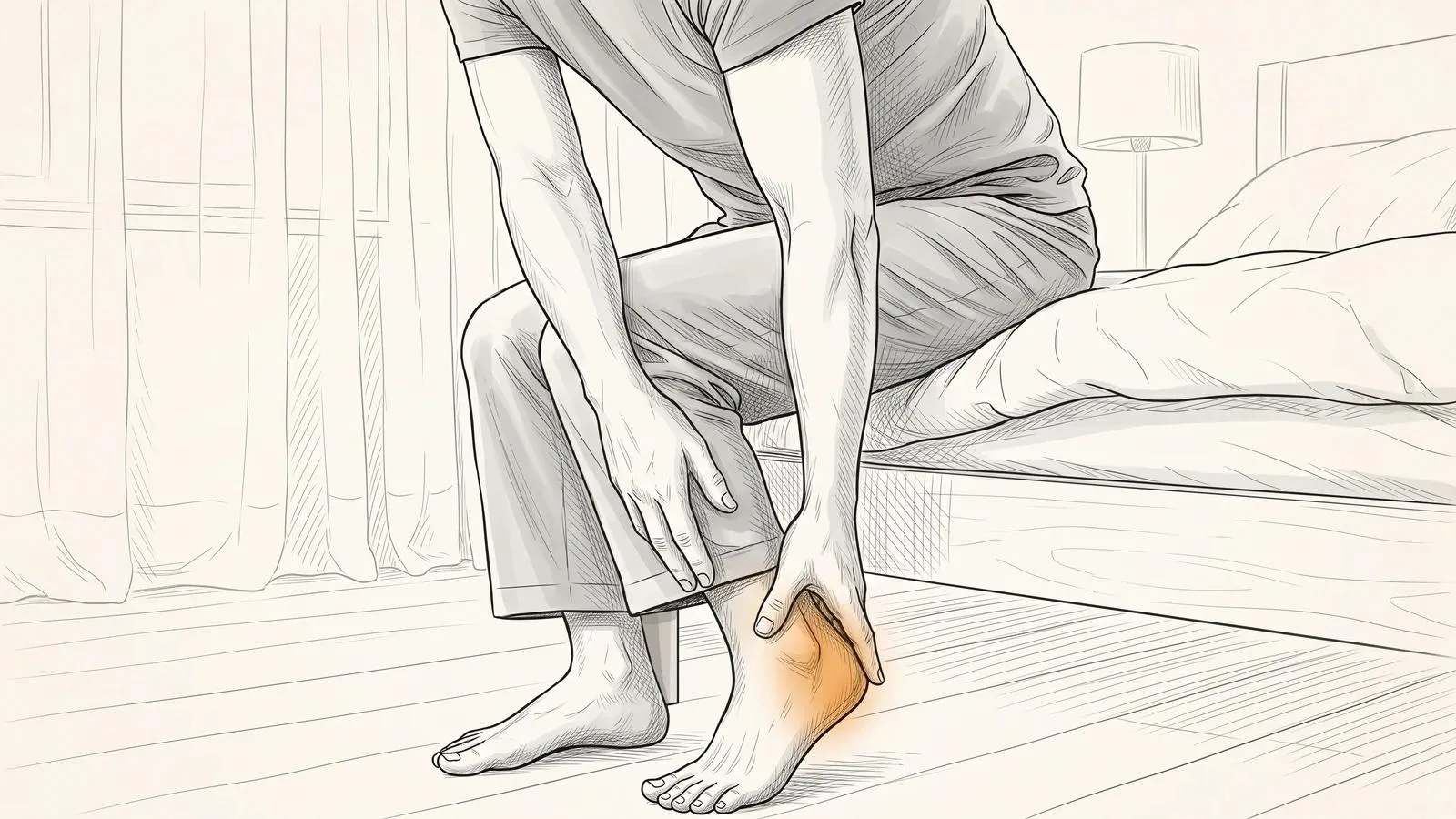
With plantar fasciitis heel pain being one of the most common problems seen and treated by our podiatrists, when patients make a booking with us, there’s often an important question they ask: what can I be doing at home to help my heel pain?
It’s a great question, and there are several steps you can take to reduce your symptoms and support your recovery long before you step into our clinic.
Towel stretches before you get out of bed in the morning
One of the classic features of plantar fasciitis heel pain is first-step pain, that sharp pain under the heel when you first get out of bed or stand after sitting for a while.
Before putting your foot on the floor in the morning, try gently stretching the plantar fascia and calf. Place a towel or exercise band around the ball of your foot and, with your leg out in front of you, gently pull your foot and toes towards you. Hold the stretch for around 10 to 20 seconds and repeat several times.
You can also gently pull the big toe back towards you with your hand to specifically stretch the plantar fascia.
Doing this before those first few steps may help reduce morning heel pain and make getting started a little more comfortable.
Wearing good, supportive shoes inside your home
When plantar fasciitis is painful, we recommend wearing supportive footwear as much as possible, including inside the house.
Ideally, choose a comfortable walking or running shoe with good cushioning and a minimum heel-to-toe height difference, or pitch, of at least 1 cm. This means the heel sits slightly higher than the forefoot rather than the shoe being completely flat.
We also prefer a shoe that laces or straps securely to the foot rather than a slip-on. This allows the upper of the shoe to wrap securely around the foot, so the shoe can effectively act as a brace, providing support and helping control movement while you walk.
During the painful stage, we recommend taking flat shoes and barefoot walking off the menu for a while. This doesn't mean you'll never be able to wear flats or walk barefoot again. It's a temporary strategy to reduce aggravating load while the pain settles and you progressively rebuild the plantar fascia's ability to tolerate load.
Rolling the bottom of your foot with a frozen water bottle or tennis ball
Some people find that gently rolling the sole of the foot over a tennis ball, a massage ball, or a cool water bottle provides temporary relief.
The pressure can gently massage the plantar fascia and surrounding tissues, while cooling may provide short-term pain relief. You don't need to aggressively roll the foot or try to “break up” the plantar fascia, more pressure isn't necessarily better.
Try it for a few minutes at a comfortable pressure and see how your heel responds. If it makes your symptoms worse afterwards, stop or reduce the intensity.
Calf stretching
Calf flexibility can be relevant to plantar heel pain because limited ankle movement can affect how loads are transferred through the foot during walking and exercise.
Regular calf stretching may therefore be useful for some people with plantar fasciitis, particularly when calf tightness or limited ankle dorsiflexion is part of the problem.
A simple calf stretch against a wall can be performed with the back knee straight to target the gastrocnemius, and then with the knee slightly bent to target the deeper soleus muscle.
Stretching should feel like a comfortable pull rather than producing significant heel pain
Gradually strengthening the foot and calf
While stretching can help with symptoms and flexibility, strengthening and progressive loading are also important parts of recovering from plantar fasciitis.
The goal is to gradually increase the ability of the plantar fascia, calf and foot muscles to tolerate the loads you place on them during everyday life, work and exercise.
Exercises may start with simple calf raises and progress as your symptoms improve. The right level depends on how irritable your heel is and what you're trying to get back to, so avoid suddenly increasing exercise because the heel feels better for a day or two.
Some discomfort during rehabilitation isn't necessarily harmful, but your heel should generally settle again rather than becoming progressively more painful from session to session.
Using pain relief
Pain relief can sometimes be useful when plantar heel pain is particularly uncomfortable.
Simple pain relief or non-steroidal anti-inflammatory medicines (NSAIDs) may provide short-term relief for some people, but NSAIDs aren't suitable for everyone and plantar fasciitis isn't simply an inflammatory condition.
If you're unsure whether a medication is safe for you, particularly if you have kidney, stomach or cardiovascular problems or take other medications, speak with your GP or pharmacist.
Pain relief can make you more comfortable, but it doesn't address the underlying loading problem.
Will These Home Remedies Cure My Plantar Fasciitis?
These strategies can help reduce symptoms and, particularly with appropriate progressive strengthening and load management, can form a meaningful part of your recovery.
The important thing is understanding why your plantar fascia has become painful in the first place. Often there isn't one single cause. Changes in activity, footwear, calf and foot strength, joint movement, foot mechanics, body weight, and the overall load you're placing through the foot may all contribute.
At Masterton Foot Clinic, we assess these factors and develop a treatment plan around your symptoms, activities and goals. Depending on what we find, treatment may include footwear advice, activity modification, a structured loading programme, strapping, foot orthoses and, where appropriate for persistent plantar heel pain, shockwave therapy.
Our aim isn't simply to make the heel feel better temporarily. It's to help the plantar fascia regain the capacity to handle the things you want to do, and reduce the likelihood of the problem returning.
Learn more about how we treat plantar fasciitis and what you can expect from your appointment here.