

Jones Avulsion Fracture
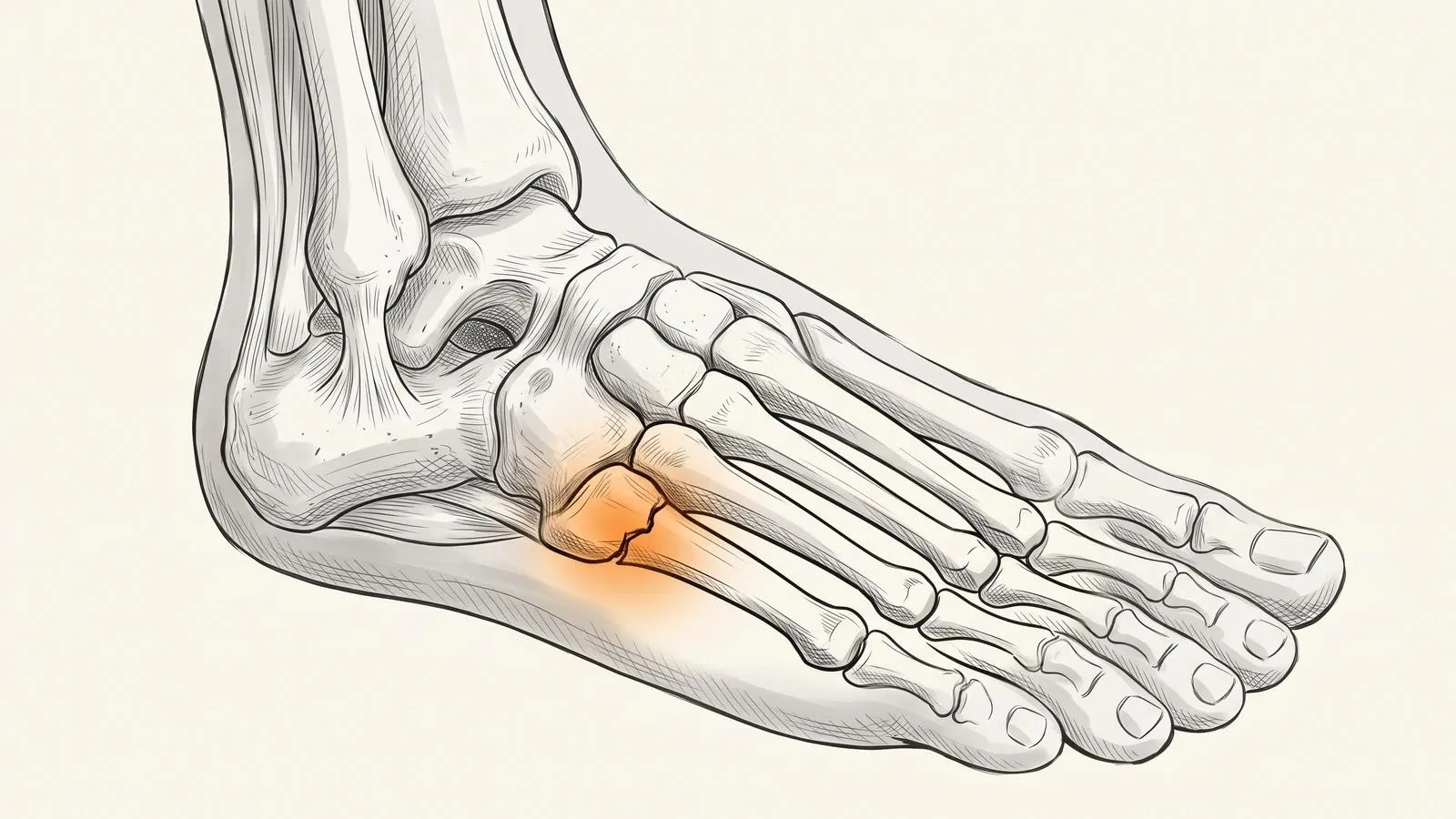
Fractures at the base of the fifth metatarsal, the long bone running along the outside of the foot towards the little toe, are relatively common injuries. Two types you may hear about are a fifth metatarsal avulsion fracture and a Jones fracture.
Although these fractures occur quite close together, they are not the same injury. This distinction matters because they have different healing characteristics and may require different treatment.
An avulsion fracture occurs when a small piece of bone is pulled away from the main bone at the attachment of a tendon or ligament. At the fifth metatarsal, this occurs at the bony prominence at the base of the bone.
A Jones fracture occurs slightly further along the fifth metatarsal. This region has a less favourable blood supply, meaning Jones fractures can be slower to heal and have a greater risk of delayed healing or non-union.
A Fifth Metatarsal Avulsion Fracture Or Jones Fracture Is Felt On The Outside Of The Foot
If you run your fingers along the outside edge of your foot, you’ll be able to feel a bony bump around the midfoot called the tuberosity or styloid process. This is the base of your fifth metatarsal.
A fifth metatarsal avulsion fracture occurs at this bony prominence. It commonly happens when the foot suddenly rolls inwards, with forces from the attached tendons and supporting tissues pulling a small piece of bone away.
A Jones fracture occurs a little further along the fifth metatarsal, at an area called the metaphyseal-diaphyseal junction. This area has a less favourable blood supply than the tuberosity, which is one reason Jones fractures need to be treated more cautiously.
There is also a third group of fractures that can occur further along this region of the fifth metatarsal, often associated with repetitive loading and bone stress.
This is why simply being told that you have “a fracture at the base of the fifth metatarsal” doesn't necessarily tell you how it should be managed. The exact location and type of fracture matter.
What Are The Symptoms Of A Fifth Metatarsal Fracture?
Common signs include
- Pain and tenderness along the outside of the foot
- Swelling along the outside of the foot
- Bruising, which may extend into the foot or toes
- Pain when standing or walking
- Difficulty walking normally or a limp
- Difficulty comfortably wearing a shoe because of swelling and tenderness
These injuries can occur alongside an ankle sprain. This means that what initially looks like “just a sprained ankle” may also involve a fracture at the base of the fifth metatarsal.
The location of the tenderness, how the injury occurred and appropriate imaging can help us distinguish an avulsion fracture from a Jones fracture or another type of fifth metatarsal injury.
Who Is At Risk?
A fifth metatarsal avulsion fracture can happen to almost anyone. It commonly occurs when the foot suddenly rolls inwards, such as when stepping awkwardly off a curb, landing unevenly, stepping into a hole, twisting the foot during sport or falling from a step.
The peroneus brevis tendon, which runs down the outside of the leg and attaches at the base of the fifth metatarsal, is one of the structures involved in this injury. When the foot suddenly rolls inwards, forces through the tendon and surrounding tissues can contribute to the avulsion of a small piece of bone.
A Jones fracture may also occur following a sudden injury, particularly when significant force passes through the outside of the foot. Repetitive loading can also contribute to fractures around this region of the fifth metatarsal, particularly in active people and athletes.
The important point is that pain on the outside of the foot following an injury isn't always simply an ankle sprain
How Is An Avulsion Fracture Treated?
Treatment depends significantly on which type of fracture you have.
- Protect the injured foot: initially, reduce activities that significantly increase pain and avoid unnecessary repeated loading of the injury. Elevating the foot and using cold therapy may help with pain and swelling during the early stages.
- Pain relief: simple pain relief may be helpful. Anti-inflammatory medicines such as ibuprofen may be appropriate for some people but aren't suitable for everyone, so check with your pharmacist, GP or other health professional if you're unsure.
- Have the injury assessed: significant pain and swelling around the outside of the foot following an injury may require an X-ray. Identifying exactly where the fracture is located helps determine the appropriate treatment.
- Immobilisation or support: an uncomplicated avulsion fracture can often be managed with protected weight-bearing and an appropriate supportive shoe or walking boot. A Jones fracture may require a more cautious period of immobilisation and weight-bearing restriction.
- Surgery: most uncomplicated fifth metatarsal avulsion fractures don't require surgery. Surgery is considered more often for Jones fractures, particularly in some athletes, displaced fractures or fractures that are not healing as expected.
- Recovery: many avulsion fractures show good clinical healing within approximately six to eight weeks. Jones fractures can take longer. Return to running and sport should be based on the fracture type, healing, symptoms and restoration of function rather than simply reaching a particular number of weeks.
- It can take anywhere between six weeks and four months, or longer if complications arise
Podiatrist Treatment
We recommend having your foot assessed if you suspect you may have fractured your fifth metatarsal. One of the first priorities is establishing which type of fracture you have, as an avulsion fracture, Jones fracture and fifth metatarsal stress fracture can require different management.
Depending on your injury and symptoms, we may recommend:
- A moon boot, supportive shoe or other form of protection where appropriate
- Advice on how much weight you can safely put through the foot
- Footwear advice as you progress out of immobilisation
- Temporarily modifying your work, exercise and sporting activities while the fracture heals
- A progressive rehabilitation programme to restore movement, strength, balance and confidence as healing allows
- Follow-up imaging or referral where the fracture pattern or progress indicates this is necessary
Most fifth metatarsal avulsion fractures heal well without surgery. A Jones fracture warrants closer consideration due to its location and the greater risk of delayed healing or non-union.
If the fracture isn't healing as expected, is significantly displaced, involves the joint in a way that may affect function, or the fracture type makes surgical management worth considering, we can arrange further imaging or referral for an orthopaedic opinion.
FAQs
What is the difference between a fifth metatarsal avulsion fracture and a Jones fracture?
Both occur near the base of the fifth metatarsal on the outside of the foot, but they occur in different locations.
An avulsion fracture occurs at the tuberosity or styloid at the base of the bone, where a small piece of bone is pulled away by forces from the attached soft tissues. These fractures generally have a good blood supply and most heal well without surgery.
A Jones fracture occurs slightly further along the fifth metatarsal at the junction between the wider base of the bone and its shaft. This area has a less favourable blood supply and therefore has a greater risk of delayed healing or non-union.
This is why getting the diagnosis right matters.
Is surgery necessary to treat a fifth metatarsal avulsion fracture or Jones fracture?
Most fifth metatarsal avulsion fractures don't require surgery and can be managed with appropriate protection, progressive weight-bearing, and a gradual return to normal activity.
Jones fractures are different. Many can still be treated without surgery, but surgical fixation may be considered depending on the fracture, the person's activity demands and the risk of delayed healing. Surgery may be considered earlier for some competitive or high-level athletes, in whom a reliable and timely return to sport is particularly important.
How long does it take to recover from a fifth metatarsal fracture?
For an uncomplicated avulsion fracture, bone healing typically occurs over approximately six to eight weeks, although symptoms may take longer to fully settle.
Jones fractures can take longer to heal and require closer monitoring due to their higher risk of delayed union or non-union.
Return to everyday walking generally occurs before return to higher-load activities such as running, jumping and sport.
Are there any complications associated with fifth metatarsal fractures?
Most fifth metatarsal avulsion fractures heal without significant problems. Occasionally, people can experience persistent pain, delayed healing or symptomatic non-union.
Delayed union and non-union are a greater concern with Jones fractures because of the blood supply in this region of the bone.
If pain isn't improving as expected, the injury should be reassessed.
Can I bear weight on the affected foot with a fifth metatarsal fracture?
It depends on the type of fracture.
Many uncomplicated fifth metatarsal avulsion fractures can be managed with protected weight-bearing as tolerated, using an appropriate supportive shoe or walking boot if required.
A Jones fracture may require greater restriction of weight-bearing, particularly during the early stages of healing. Your podiatrist will provide advice based on the exact location and appearance of the fracture, as well as your individual circumstances.
Are there any long-term effects or risks associated with a fifth metatarsal fracture?
Most people with an uncomplicated avulsion fracture recover well and return to their usual activities without significant long-term problems.
Some people may experience lingering tenderness or discomfort around the fracture site for a period after healing. Jones fractures have a greater risk of delayed healing, non-union or refracture.
Persistent pain, swelling or difficulty returning to activity warrants reassessment.
How can I manage pain and swelling after a fifth metatarsal fracture?
Your podiatrist may recommend:
- Protecting the injured foot and temporarily modifying painful activities.
- Elevating the foot when practical to help manage swelling.
- Applying cold therapy for short periods if you find it helpful for pain.
- Taking appropriate pain relief where required.
- Wearing a supportive shoe or walking boot if indicated for your particular fracture.
When can I return to my regular activities or sports after a fifth metatarsal fracture?
Return to activity depends on the type of fracture and how your recovery progresses, rather than simply reaching a particular number of weeks.
Everyday walking is generally restored before higher-load activities such as running, jumping and sport. Rehabilitation should progressively rebuild movement, strength, balance and your foot's ability to tolerate the demands of your chosen activity.
Jones fractures generally require more caution with return to high-load activity than uncomplicated avulsion fractures.
What can I do to promote bone healing and overall recovery after a fifth metatarsal fracture?
To support your recovery:
- Follow the advice you have been given regarding protection and weight-bearing.
- Attend follow-up appointments where recommended to monitor healing.
- Eat a balanced diet with adequate energy, protein, calcium and other nutrients required for bone health.
- Avoid smoking, as this can interfere with bone healing.
- Gradually restore movement, strength and balance as healing allows.
- Progress activity gradually rather than suddenly returning to your previous exercise or sporting loads.
- If the fracture occurred with minimal trauma, is recurrent, or there are concerns about your bone health, further assessment of factors affecting bone strength may be appropriate.