
Sore Heels
Having sore heels can not only be painful and frustrating, but also really limiting for everyday life and the ability to enjoy sports, walks with loved ones, and even just running daily errands.
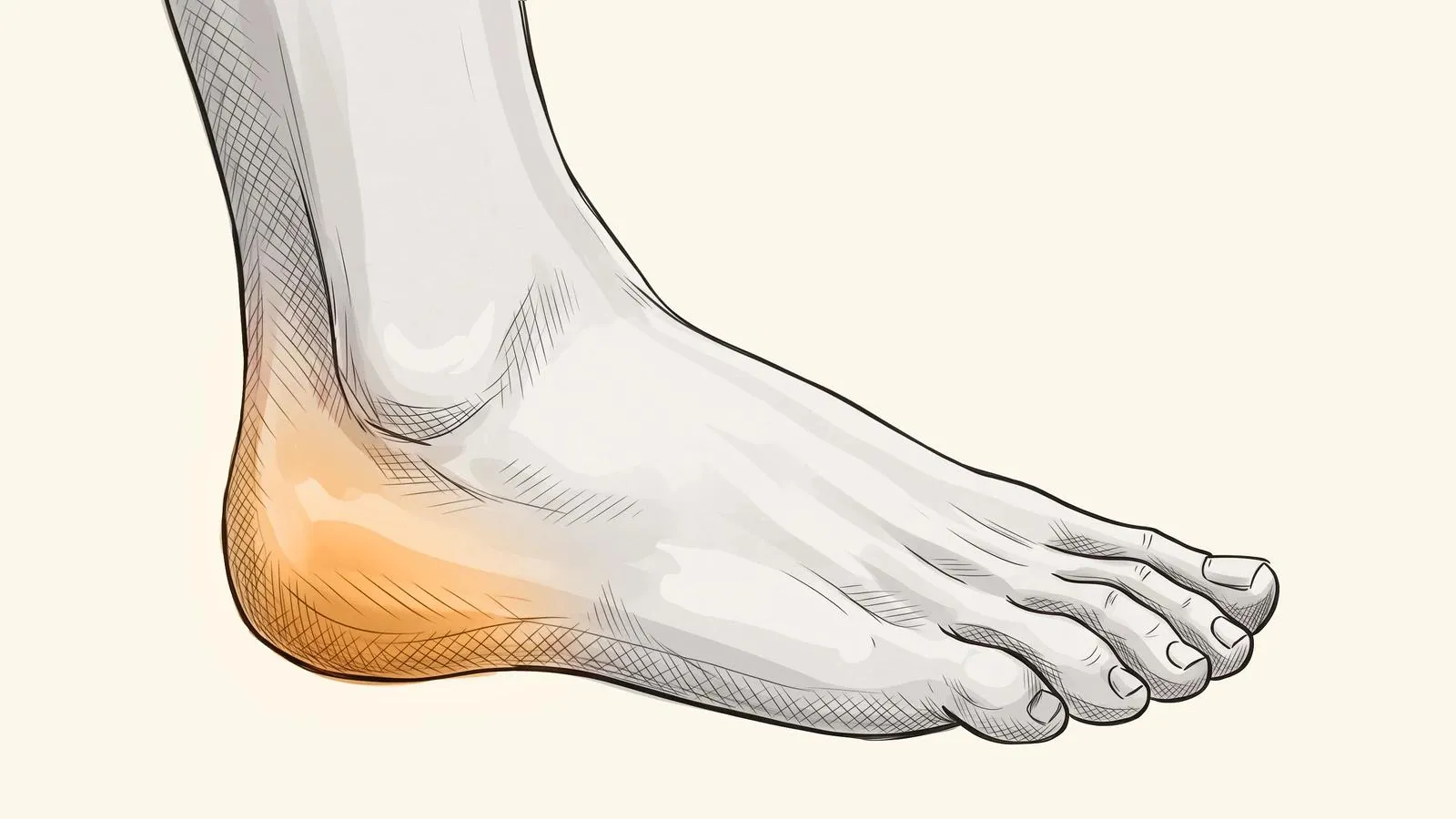
Heel pain can affect people of all ages and activity levels. The pain may be felt underneath the heel, around the back or sides of the heel, or where the Achilles tendon attaches. It can feel like a dull ache, a burning sensation, or a sharp, stabbing pain, and can range from mild to severe.
Importantly, “heel pain” isn't a diagnosis. There are several structures around the heel that can become painful, and identifying which one is involved is the first step towards effective treatment.
So what could be causing your sore heels?
Causes of Sore Heels
- Plantar Fasciitis: one of the most common causes of pain under the heel is plantar fasciitis, also known as plantar fasciopathy or plantar heel pain. Rather than simply inflammation of the plantar fascia, persistent plantar fasciitis is better understood as a load-related condition involving changes in the fascia where it attaches at the heel. A classic feature is pain with the first few steps after getting out of bed or following a period of rest. Symptoms often ease after moving around, then return with prolonged standing, walking, or activity.
- Heel Spurs: Heel spurs are bony projections that can develop where tissues attach around the heel bone. They are commonly seen on X-rays, particularly in people with plantar heel pain, but the spur itself is not necessarily the cause of the pain. Many people have heel spurs without any symptoms at all. This is important because treatment usually focuses on the painful tissues and the loads placed through them rather than on treating or removing the spur itself.
- Achilles Tendonitis: Achilles tendonitis is a commonly searched term, although Achilles tendinopathy is generally a better description of persistent Achilles pain. The Achilles is the large tendon connecting the calf muscles to the heel bone. Symptoms may develop in the middle portion of the tendon or where it attaches to the back of the heel. Rather than simply being inflammation, Achilles tendinopathy involves changes in the tendon and its ability to tolerate load. Pain and stiffness may be particularly noticeable when first getting up, when walking uphill or during running and jumping activities.
- Bursitis: bursae are small fluid-filled structures that help reduce friction between tissues. Around the heel, bursitis can occur near the Achilles tendon and the back of the heel. This can cause pain, swelling and tenderness, sometimes aggravated by footwear pressing against the area. Bursitis may occur alongside other problems, including insertional Achilles tendinopathy or a prominent heel bone.
- Stress Fractures: Bone stress injuries occur when repeated loading exceeds the bone's ability to recover and adapt. In the heel, this can affect the calcaneus. A bone stress injury may begin as a stress reaction before progressing to a stress fracture if excessive loading continues. Pain often becomes progressively worse with weight-bearing and activity and may become increasingly persistent. Early bone stress injuries don't always show on an X-ray, so further imaging may sometimes be required.
- Nerve Entrapment: Nerve irritation or entrapment can cause heel pain, often accompanied by burning, tingling, shooting pain or altered sensation. Tarsal tunnel syndrome is one possible cause, but other nerves around the heel can also become irritated or compressed. Nerve-related heel pain can sometimes originate further up the leg or from the lower back, so getting the diagnosis right is important.
- Rheumatoid Arthritis: Rheumatoid arthritis is an autoimmune inflammatory condition that can affect joints and soft tissues throughout the body, including structures around the heel. Other inflammatory conditions, including psoriatic arthritis and the group of conditions known as spondyloarthritis, can also cause heel pain, particularly around the attachment of the Achilles tendon or plantar fascia.
- Gout: Gout is a type of inflammatory arthritis caused by urate crystals forming within a joint. Although the big toe joint is the classic location, gout can affect other joints and structures around the foot and ankle. Sudden severe pain, warmth, redness and swelling should be properly assessed rather than assumed to be ordinary mechanical heel pain.
- Tendon Problems: While the Achilles tendon is the most commonly associated with heel pain, other tendons around the foot and ankle can sometimes cause pain felt around the heel. Tendon pain is generally treated according to the specific tendon involved and its ability to tolerate load rather than simply treating “inflammation”.
- Sever’s Disease: Sever’s disease, more accurately called calcaneal apophysitis, is a common cause of heel pain in growing children and adolescents. It occurs when the growth area at the back of the heel becomes irritated by repeated loading and traction, often during periods of rapid growth and increased sporting activity. It is not a disease in the usual sense and does not mean there is permanent damage to the heel. Treatment focuses on managing load and symptoms while allowing the child to remain appropriately active.
- Systemic Diseases: heel pain isn't always purely mechanical. Diabetes can contribute to nerve-related symptoms and increases the importance of checking for wounds, infection and circulation problems. Peripheral arterial disease can also cause lower-limb pain, although isolated heel pain is not its most typical presentation. Other medical and inflammatory conditions can also contribute to foot pain, which is why your wider health history is an important part of the assessment
Symptoms of Sore Heels
The symptoms of sore heels vary considerably depending on the underlying cause and where the pain is located on the heel. They may include:
- Pain underneath the heel: particularly with the first few steps in the morning or after rest, which is commonly associated with plantar heel pain.
- Pain at the back of the heel: particularly during walking, running or when pushing up onto the toes, which may suggest involvement of the Achilles tendon or nearby structures.
- Pain that gradually worsens with activity: which can occur with tendon problems, plantar heel pain and bone stress injuries.
- Difficulty walking or standing for extended periods because of pain.
- Swelling, warmth or redness: which may occur with an acute injury or inflammatory condition. Significant redness, warmth, and swelling can also indicate infection or gout and should be appropriately assessed.
- Burning, tingling or numbness: these symptoms raise the possibility of nerve involvement and should not simply be assumed to be plantar fasciitis.
- Stiffness: particularly after rest or first thing in the morning, which can occur with plantar heel pain, Achilles tendinopathy and some forms of arthritis.
- Pain when the heel is squeezed or loaded: depending on the location and clinical findings, this may raise suspicion of a bone stress injury or other problem involving the heel bone.
- Weakness or difficulty pushing off the foot: particularly if this develops suddenly following an injury, which may indicate a significant Achilles or other soft-tissue injury.
A sudden inability to push off the foot, a significant injury accompanied by a “pop”, rapidly increasing swelling, a hot red foot, an open wound or an inability to comfortably bear weight should be assessed promptly.
Treatment for Sore Heels
Once we understand what is actually causing your heel pain, we can create a treatment plan that takes into consideration your symptoms, daily activities, footwear, lifestyle and goals.
The first aim is often to settle the painful or overloaded structure enough to keep you moving comfortably. Longer-term treatment focuses on restoring the affected tissues' ability to tolerate the loads required for your everyday life, work, exercise, or sport.
There isn't one treatment programme that works for every sore heel. Depending on your diagnosis and the severity of your symptoms, treatment may include:
- Foot orthotics: foot orthoses can be very useful for selected causes of heel pain by changing how load is distributed through the foot and reducing stress on a painful or overloaded structure. Depending on what we find during your assessment, this may involve a prefabricated device or a custom orthotic. At Masterton Foot Clinic, custom orthoses are predominantly produced using modern 3D scanning, design and manufacturing techniques. Orthotics aren't necessary for every person with heel pain, so we prescribe them when we believe they have a useful role in the overall treatment plan.
- Shockwave treatment: radial pressure wave/shockwave therapy can be a useful addition to treatment for some persistent heel conditions, particularly chronic plantar heel pain and some forms of Achilles tendinopathy. It uses acoustic pressure waves applied to the affected tissue and has evidence supporting its use in selected persistent tendinopathies and plantar heel pain. It is generally used alongside load management and rehabilitation, rather than as a stand-alone treatment or a way of simply “accelerating healing”.
- Foot mobilisation: hands-on mobilisation may be useful when restricted movement of the foot or ankle is contributing to symptoms. It may provide symptom relief and help restore movement, but is generally used as part of a broader treatment plan rather than as the sole treatment for heel pain.
- Footwear review: footwear can significantly affect the load on a painful heel. We’ll review your everyday, work and sporting footwear and recommend changes where they are likely to improve comfort or help your recovery.
- Strapping: strapping can provide short-term symptom relief for some types of heel pain, particularly plantar heel pain. It can also be useful as a temporary way of seeing whether changing the load through the foot improves your symptoms before considering longer-term options.
- Stretching: stretching may be useful where reduced calf or ankle flexibility is relevant to the problem. For plantar heel pain, specific plantar fascia stretching can also help some people. Stretching is selected based on the diagnosis, rather than assuming that every painful heel simply needs stretching.
- Strengthening and progressive loading are important parts of treatment for many causes of heel pain. Tendons, muscles, and the plantar fascia respond to appropriate progressive loading by increasing their ability to withstand the forces required in everyday life and sport. Exercises are prescribed according to the painful structure, your current capacity and what you need to get back to doing.
- Exercise and load review: complete rest is rarely the long-term answer for persistent mechanical heel pain. Instead, we look at what you're currently doing, identify loads that may be aggravating the problem and adjust them temporarily where needed. We then progressively rebuild activity as your symptoms and tissue capacity improve.
- Pain management: cold therapy or simple pain relief may provide short-term symptom relief for some people, particularly following an acute flare. Anti-inflammatory medicines such as ibuprofen may be appropriate for certain conditions and certain people, but not all heel pain is inflammatory, and these medicines aren't suitable for everyone. If you're unsure, discuss this with your pharmacist or GP.
For more significant injuries, treatment may occasionally require a period in a moon boot or other form of immobilisation, particularly where there is a suspected bone stress injury, acute tear or another condition where temporarily protecting the tissues is important.
The key is that we don't simply treat “heel pain”. We identify the painful structure, work out what has contributed to it becoming overloaded or injured, and then build a plan to get you comfortably back to the things you want to do.