

What are the best moisturisers to use on my feet?
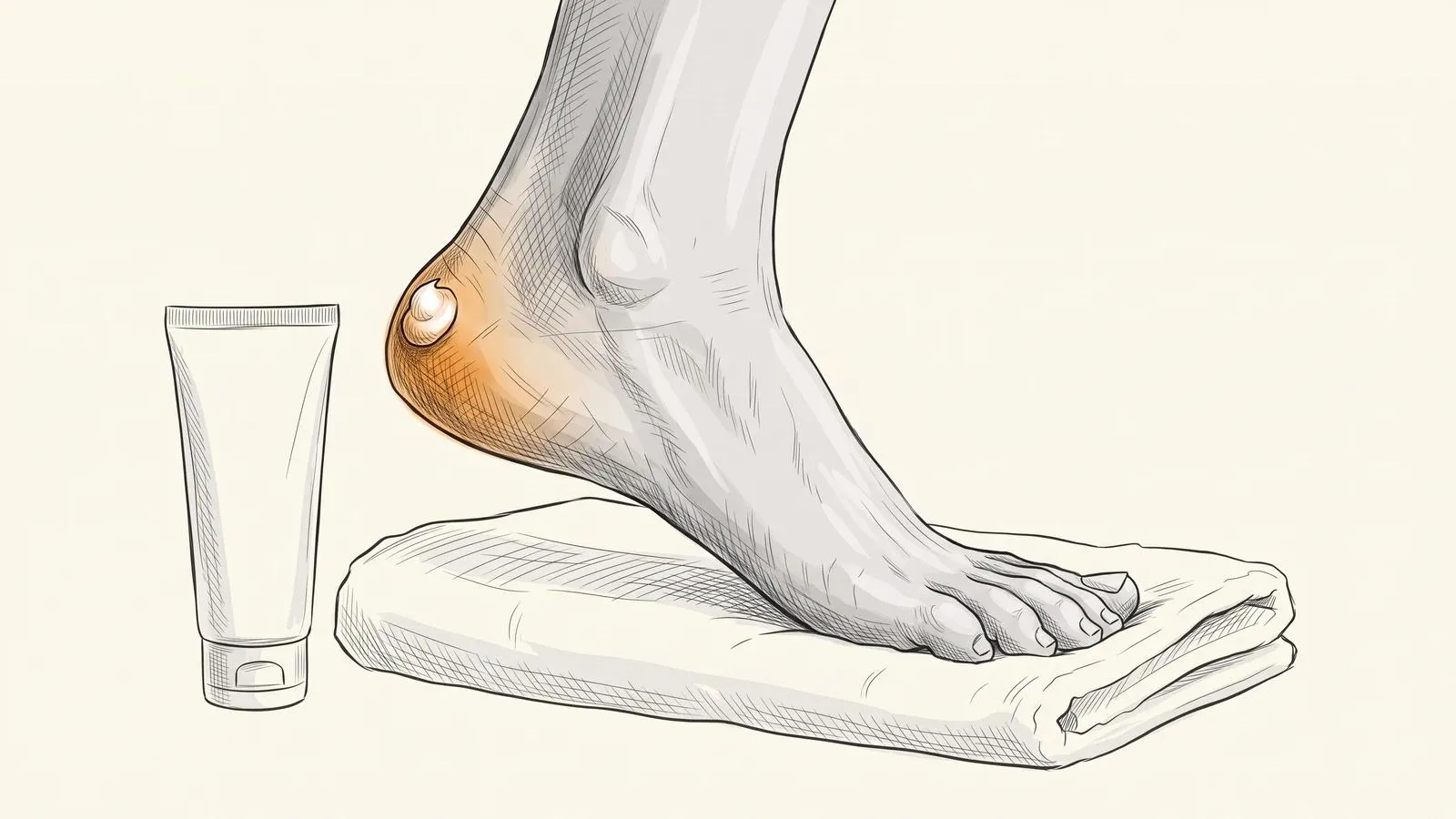
Foot lotions and moisturisers, heel creams and balms, body oils… There are so many foot care products available that it can be difficult to know what to choose. So what is the best moisturiser to use on your feet?
The answer depends on what your skin actually needs. Mildly dry skin may respond well to a regular moisturising cream, while very dry, thickened or cracked skin often benefits from a stronger product containing ingredients such as urea.
“Podiatrists call splits or cracks in the heels ‘fissures’.”
Dry, cracked and calloused heels can become incredibly painful. When cracks extend through the outer layers of the skin into healthy tissue beneath, they can bleed, creating an opening that increases the risk of infection. Podiatrists call these splits or cracks fissures.
Fissures commonly develop around the edges of the heel where the skin has become dry, thickened and less flexible. When we stand and walk, the heel expands slightly under load. If the skin around it isn't flexible enough to accommodate this movement, it can begin to split.
Listed below are some of the reasons why we can develop cracked heels
- Naturally dry skin or reduced sweating
- Skin conditions such as psoriasis and eczema
- Athlete’s foot (tinea pedis), which can sometimes look like ordinary dry or flaky skin
- Age-related changes in the skin
- Spending long periods standing or walking
- Frequently wearing open-backed footwear such as jandals or sandals
- Repeated pressure and callus build-up around the heel
- Footwear that allows excessive movement or pressure around the heel
- Higher body weight, which can increase the forces through the heel
- Diabetes, particularly when associated with changes in sweating, sensation or circulation
- Some medications and medical conditions that contribute to skin dryness
- Cold, dry or low-humidity environments
Often there isn't one single cause. Several of these factors may be working together.
“Regular moisturising can help prevent deep cracks developing”
It is much easier to manage dry heels before deep fissures develop. Applying an appropriate moisturiser every day, often after showering or before bed, can help the skin retain moisture and remain more flexible.
If the skin is already very dry, thickened or beginning to crack, applying moisturiser once or twice daily may be useful.
If your heels are itchy, peeling or developing a powdery scale, however, don't automatically assume they just need more moisturiser. Athlete’s foot can sometimes mimic dry skin, and moisturiser alone won't treat the underlying fungal infection.
If you already have deep or painful cracked heels, don't despair. There is plenty we can do to help.
What to look for when buying a foot care product
One of the most useful ingredients to look for in a foot moisturiser is urea.
Urea helps attract and retain water within the outer layers of the skin. At higher concentrations, it also has a keratolytic effect, helping soften and reduce excessively thickened or calloused skin.
The concentration matters.
At Masterton Foot Clinic, we stock 10%, 25%, and 40% urea products, allowing us to match the strength to the skin's condition.
A lower concentration may be appropriate for everyday moisturising and maintenance, while higher concentrations can be useful when the skin has become significantly dry, hard or thickened.
Other useful ingredients found in moisturisers include glycerine, petrolatum and ceramides, which help improve hydration and support the skin barrier.
The most important thing is to use the right product for your skin, and to use it consistently.
“Treatments for cracked heels are made up of two different products, occlusives or humectants”
Moisturisers work in several different ways.
Humectants, including urea and glycerin, attract and retain water within the skin's outer layers.
Occlusives, such as petrolatum, form a protective layer over the skin that reduces water loss.
Many good moisturisers combine several types of ingredients, helping to increase the skin's water content while also reducing moisture loss.
Ointments tend to be more occlusive than creams and can be particularly useful for very dry skin, although they are also greasier. Creams are often easier and more pleasant to use during the day.
There isn't one perfect moisturiser for everyone. The right choice depends on how dry the skin is, whether there is significant callus or fissuring, and what you're prepared to use consistently.
Products available in New Zealand ideal for dry, sore and cracked heels
Rather than simply choosing a particular brand, we recommend looking at what is in the product and what you're trying to achieve.
At Masterton Foot Clinic, we stock urea-based products in several concentrations:
- 10% urea: a good option for everyday moisturising of dry skin and ongoing maintenance. It helps the skin attract and retain moisture.
- 25% urea: useful for skin that has become noticeably drier, thicker or more calloused. At this concentration, urea helps moisturise and soften thickened skin.
- 40% urea: a stronger preparation that can be useful for targeted areas of significant hard or thickened skin. This isn't necessarily an everyday moisturiser and is best used where it is specifically indicated.
Stronger isn't necessarily better. The goal is to match the product's strength to the skin's condition.
We also stock Spirularin Gel, which may be recommended in selected cases where additional skin protection is useful or where there are concerns about recurrent skin or fungal problems. It has a different role from a straightforward urea moisturiser, so we recommend it when appropriate rather than as a general treatment for every dry or cracked heel.
If you're unsure which product is appropriate, we can assess your skin and recommend the most suitable option rather than relying on trial and error
“Natural oils are excellent moisturisers for your feet”
Natural oils can soften the skin and reduce moisture loss, and some people enjoy using them.
However, “natural” doesn't necessarily mean more effective or safer. Fragrances and essential oils can irritate sensitive or cracked skin, and claims that oils such as tea tree, lavender or vitamin E will heal fissures or reliably treat fungal infections shouldn't replace appropriate treatment.
For significantly dry, thickened or cracked heels, a properly formulated moisturiser containing ingredients such as urea, glycerine or petrolatum is generally a more predictable option.
You also don't need to vigorously massage moisturiser into your feet to improve your circulation. Simply applying it thoroughly and consistently is enough.
Looking after your feet
Apply moisturiser regularly, paying particular attention to the heels, soles and other dry areas. Applying it after showering, while the skin is still slightly damp, can help retain moisture.
If your feet are particularly dry or cracked, apply an appropriate moisturiser once or twice daily until the skin improves, then use it regularly.
Avoid applying heavy moisturising creams between the toes, where excessive moisture can make the skin soggy and increase the risk of skin breakdown and fungal infection.
Avoid cutting, shaving or aggressively filing thickened heel skin yourself. If significant callus has developed around the edges of a cracked heel, your podiatrist or appropriately trained Foot Care Assistant can safely reduce it. This provides a much better starting base for moisturising and ongoing skin care at home.
Deep fissures may occasionally need additional protection or dressings while the skin heals.
Seek assessment if a crack is deep, painful or bleeding, or if you notice redness, warmth, swelling, discharge or other signs that may indicate infection.
Can’t reach your feet?
If you have difficulty reaching your feet, applying moisturiser can understandably be challenging.
Rather than balancing or bending into an unsafe position, consider using a long-handled lotion applicator or asking someone you trust to help.
If reduced mobility means you're unable to safely manage your own skin or nails, our Foot Care Assistant service can also help with appropriate routine skin and nail care.
Try to avoid getting moisturiser between the toes.
Do you have diabetes?
If you have diabetes, looking after dry or cracked skin is particularly important.
Having diabetes doesn't automatically mean that you have poor circulation. However, some people with diabetes develop reduced sensation, changes in sweating and skin quality, impaired circulation or reduced healing ability. This can mean a small crack, blister or wound isn't noticed as quickly or doesn't heal as expected.
Check your feet regularly and seek advice if you notice a crack or wound that isn't healing, redness, warmth, swelling, discharge, bleeding or a change in skin colour.
If you have reduced sensation or circulation, avoid attempting to cut or aggressively file callus yourself. Having your feet assessed by a podiatrist can help identify and safely manage problems.
At Masterton Foot Clinic, our podiatrists and Foot Care Assistant can help manage dry, thickened and cracked skin, safely reduce callus and recommend an appropriate ongoing skin-care routine, including which strength of urea product is best suited to your feet.
To make an appointment, book online here.