

What's Causing Pain On The Inside Of My Foot?
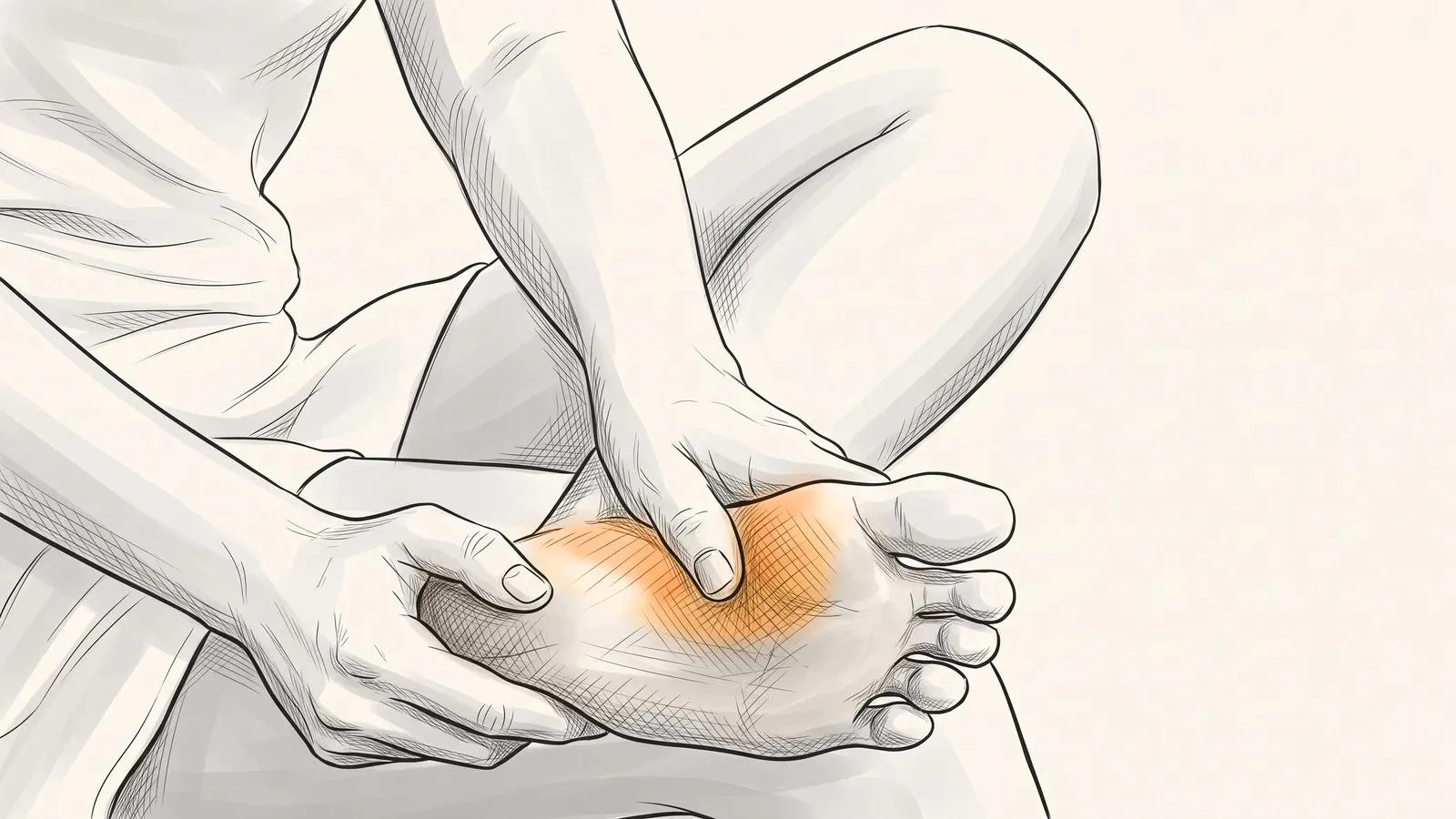
Pain in the arch, heel and along the inside of the foot is one of the most common problems we see and treat. The location may be similar from person to person, but the structures responsible for the pain can be very different.
Here are some of the common diagnoses our podiatrists consider when assessing pain on the inside of the foot.
Plantar Fasciitis
Your plantar fascia is a strong band of connective tissue that starts at your heel and fans forward towards the toes. It plays an important role in supporting the arch and helping the foot function efficiently during walking and running.
When the load placed on the plantar fascia exceeds what the tissue can tolerate, it can become painful. This is commonly called plantar fasciitis, although plantar fasciopathy is often a more accurate description because persistent plantar heel pain isn't simply an inflammatory problem.
Pain is typically felt beneath the inner heel and may extend into the arch. One of the classic symptoms is pain with the first few steps in the morning or after sitting for a period.
Abductor Hallucis Tendinopathy
The abductor hallucis is a muscle that runs along the inside of the foot from the heel towards the big toe. It helps control the big toe and supports the inside of the foot during movement.
Like other muscles and tendons, this area can become painful when overloaded. However, pain around the abductor hallucis can sometimes be difficult to distinguish from plantar fascia pain or irritation of the medial plantar nerve, which travels through this region.
This is one reason why pain through the inside of the arch shouldn't automatically be assumed to be plantar fasciitis.
Posterior Tibial Tendon Dysfunction (PTTD)
The posterior tibial tendon travels down the inside of the lower leg, behind the inside of the ankle and attaches to several structures around the inside and underside of the foot. It plays an important role in supporting the arch and controlling the foot during walking.
When the tendon becomes painful or loses its ability to function effectively, people may develop pain and swelling behind the inside ankle or through the arch, weakness when trying to rise onto the toes, and in more advanced cases a progressively flatter foot.
This has traditionally been called posterior tibial tendon dysfunction (PTTD). The broader condition is now often referred to as progressive collapsing foot deformity (PCFD) because we understand that the problem can involve more than just the posterior tibial tendon.
Early assessment is worthwhile because treatment can often help manage symptoms and support the foot before the condition progresses.
Tarsal Tunnel Syndrome
Tarsal tunnel syndrome can cause pain, burning, tingling, pins and needles, or numbness in the heel and sole of the foot.
It occurs when the tibial nerve is irritated or compressed as it passes through a confined space behind the inside of the ankle called the tarsal tunnel.
Symptoms may worsen with prolonged standing, walking or activity. Because nerve symptoms can also originate elsewhere, including further up the leg or from the lower back, a good neurological assessment is important.
Medial plantar nerve entrapment is another potential cause of pain or burning along the inner arch and may occur where the nerve courses around structures such as the abductor hallucis muscle.
Accessory Navicular
The navicular is a bone in the inner midfoot, near the highest point of the arch.
An accessory navicular is an extra piece of bone or cartilage that develops beside the navicular. It is a relatively common anatomical variation, and many people have one without ever knowing it.
The posterior tibial tendon attaches around this area, so in some people the accessory navicular can become irritated and painful, particularly with walking, running, sport or pressure from footwear. A visible or tender bony prominence may be noticeable on the inside of the foot.
An accessory navicular is often present in both feet, although it doesn't necessarily cause symptoms on both sides.
Fractures
Stress fractures and stress reactions occur when repeated loading exceeds the bone's ability to recover and adapt. Symptoms often begin gradually and become progressively more noticeable with weight-bearing activity.
One particularly important cause of pain on the inside of the midfoot is a navicular stress injury. These injuries can occur in runners and other active people and may initially feel like a vague ache through the midfoot or arch.
Navicular stress fractures deserve particular attention because their location and blood supply can make healing more challenging. They may also be difficult to see on an early X-ray, so further imaging may be required if one is suspected.
Acute fractures can also occur following a fall, a twisting injury, or a direct impact. Significant swelling, bruising, focal bone tenderness or difficulty bearing weight following an injury should be assessed.
Experiencing burning, pins and needles, or numbness? Consider diabetes
Burning, pins and needles, tingling or numbness suggests that a nerve may be involved, but diabetes is only one possible cause.
Diabetic peripheral neuropathy commonly affects both feet and often begins in the toes before progressing further up the feet. If you have diabetes and notice new numbness, burning, tingling or changes in sensation, it's important to have this assessed.
However, symptoms confined to one area on the inside of one foot may be more suggestive of a local nerve entrapment, such as tarsal tunnel syndrome or medial plantar nerve irritation.
Other causes of peripheral neuropathy and nerve symptoms are also possible, so unexplained or persistent changes in sensation shouldn't simply be assumed to be diabetes.
So, which of these is the cause of your foot or arch pain?
The specific diagnosis, and the reason behind it, can vary significantly from person to person, and there are many more causes of medial foot and arch pain than we've listed here.
The important thing is getting the diagnosis right. Plantar fascia pain, posterior tibial tendon problems, nerve entrapment, an accessory navicular and a navicular stress injury can all produce pain in a relatively similar part of the foot, but they require very different approaches to treatment.
At Masterton Foot Clinic, we'll assess where your pain is coming from and look at the factors contributing to it. This may include your joint movement, muscle and tendon function, nerve function, footwear, activity, and how your foot and lower limb work when you walk or run. Where appropriate, imaging may also be recommended.
Treatment depends on the diagnosis and may include activity and load modification, footwear changes, strengthening and rehabilitation, strapping, foot orthoses, bracing or other treatments appropriate to the condition.
Too often we see people spending weeks or months treating what they assume is plantar fasciitis when another structure is actually responsible.
To book your appointment with our experienced podiatry team here in the Wairarapa, call us on 06 370 4057 or book online.