
What's Causing The Pain In Your Big Toe?
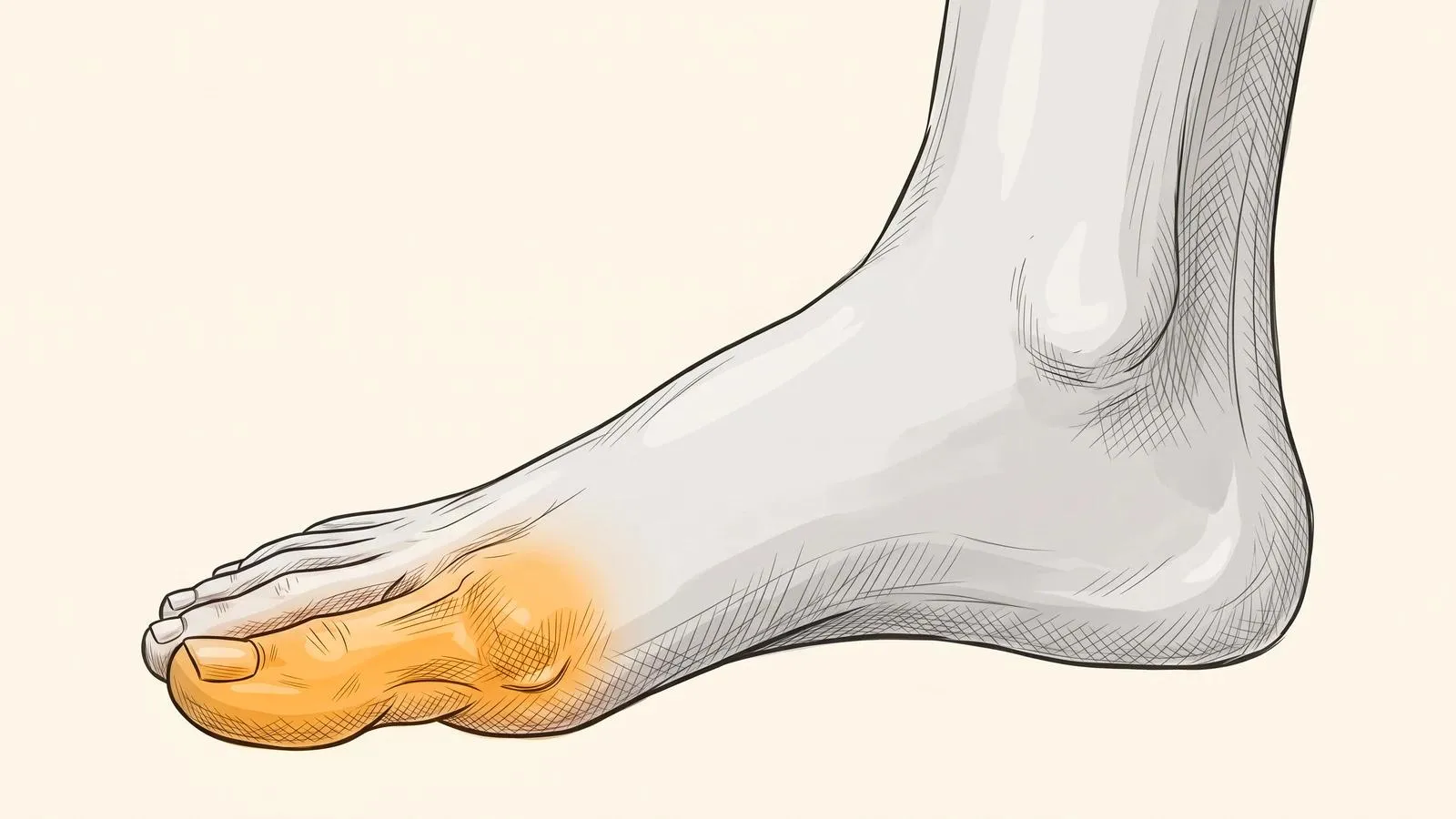
Whether your toe pain has come on hard and fast or has been building up slowly, whether you know what caused it or you have no idea, one thing is for sure: problems with the toes are frustrating, painful, and can make our days very inconvenient.
Two common questions our podiatrists get are “how do I fix my toe?” and “how do I stop the pain?”. Our less-than-ideal, yet accurate answer is: well, what’s your injury or problem? Just as the cause of your tummy ache can range from food poisoning to taking your vitamins on an empty stomach, there is a wide range of things that can go wrong with our toes. Only when we know what that is can we know how best to treat it, without wasting time and money.
So to help, today we’ve gone over ten causes of toe pain that our patients commonly experience and our podiatrists can help with. Starting with…
1. Overloading the joint
When the load going through a toe joint exceeds what the surrounding tissues can comfortably tolerate, the joint can become painful and irritated. At the big toe, this may involve capsulitis, meaning irritation or inflammation of the joint capsule, or synovitis, meaning inflammation of the synovial membrane that lines the joint.
This may follow a sudden increase in activity, repeated loading during walking or sport, or other factors that increase stress through the joint.
2. Sesamoiditis
This one is relatively common in active people, including runners and athletes involved in sports that require repeated push-off through the big toe.
You have two small bones beneath the big toe joint called the sesamoid bones. They sit within the tendons beneath the foot and act a little as the kneecap does at the knee, helping the muscles and tendons around the big toe work efficiently.
Sesamoiditis is a term used to describe pain and irritation around the sesamoid region, usually associated with repeated loading of the area. Pain is typically felt directly beneath the big toe joint and may be particularly noticeable when walking, running, jumping or pushing up onto your toes.
Importantly, not all pain beneath the big toe is sesamoiditis. Stress injury or fracture of a sesamoid, arthritis and other conditions can produce similar symptoms, so persistent pain in this area should be properly assessed.
3. Turf toe
Simply put, turf toe is a sprain of the big toe joint. It typically happens when the big toe is forcefully bent upwards beyond its normal range, damaging the soft tissues that support the joint, a little like the ligaments around the ankle can be injured when you roll it.
Turf toe gets its name from its association with sports played on artificial turf, particularly where footwear grips the surface while the foot is pushed forwards over the big toe. However, it can occur on other surfaces and during many different activities.
4. Ingrown toenail
When the edge of a toenail irritates or penetrates the skin alongside it, this is called an ingrown toenail. It can be extremely painful and may leave the toe looking red and swollen, with bleeding or discharge sometimes developing around the side of the nail.
Ingrown toenails can affect people of all ages and may be associated with nail shape, pressure from footwear, trauma or the way the nail has been cut.
5. Gout
Gout is a type of inflammatory arthritis caused by the formation of urate crystals within a joint. This occurs in people with elevated blood urate levels, although a blood urate level measured during an acute attack does not always tell the whole story.
The joint at the base of the big toe is a classic location for gout. An attack can cause sudden and often severe pain, redness, warmth, and swelling, sometimes making the area so sensitive that even the pressure of a bedsheet can be uncomfortable.
Gout often occurs in flares. If attacks recur, it is important to work with your GP or another health practitioner to manage the underlying condition and reduce the risk of future episodes.
6. Stress fracture
Stress fractures are part of a spectrum of bone stress injuries that occur when repeated loading exceeds the bone’s ability to recover and adapt. Rather than necessarily beginning as tiny cracks, the bone can first develop a stress reaction before progressing to a stress fracture if excessive loading continues.
Symptoms often begin gradually and become increasingly localised and persistent. Pain may initially occur only with activity, then become noticeable during normal walking or even at rest if the injury progresses.
Early bone stress injuries do not always show on an X-ray. Depending on the symptoms and examination findings, further imaging, such as MRI, may be required.
7. Raynaud’s
If your toes become numb, painful or change colour in response to cold temperatures, Raynaud’s phenomenon may be one possible cause.
In Raynaud’s, the small blood vessels supplying the toes temporarily narrow more than usual, reducing blood flow. The toes may become pale or white and sometimes blue. As circulation returns and the toes warm up, they may become red and feel tingly, burning, throbbing or sore.
Raynaud’s is often manageable, but new, severe or one-sided symptoms, particularly if there are wounds, persistent colour changes or concerns about circulation, should be assessed.
8. Osteoarthritis
If you have a painful, stiff big toe joint, osteoarthritis may be one possible cause. Osteoarthritis involves changes within the joint, including the cartilage and underlying bone, and can gradually restrict movement.
The big toe joint plays an important role as we move forwards over the foot during walking and running, so reduced movement here can become particularly noticeable. Symptoms may include stiffness, pain, swelling and difficulty with footwear or activities that require the big toe to bend.
The term hallux rigidus is commonly used to describe arthritis of the big toe joint that results in significant stiffness and restricted movement.
9. Bunion
A bunion, also known as hallux valgus, describes the change in alignment where the big toe moves towards the lesser toes and the joint at its base becomes more prominent on the inside of the foot.
Some bunions remain relatively painless, while others can cause considerable discomfort due to joint irritation, pressure from footwear, or crowding of the lesser toes. Bunions can change over time, but the rate and amount of progression vary considerably between people, having a bunion does not mean that it will inevitably become severe.
Treatment depends on the symptoms, the degree of deformity, footwear, and how the bunion affects your activities. Surgery is not required simply because a bunion is present.
10. Corn
If you have an area of hard skin around a toe that is particularly painful with pressure, you may have a corn. Corns are small, concentrated areas of thickened skin that develop in response to repeated pressure or friction.
They may form on top of or between the toes, at the tips of the toes, or around prominent joints. The source of the pressure may be footwear, toe position, the shape of the foot or the way load is distributed during walking.
Your podiatrist can safely remove the painful corn, but we’ll also look at why it developed in the first place. Reducing the pressure that caused it can help prevent it from quickly returning.
Need help with your toe pain?
If you’re experiencing toe pain, we’re here to help. Whether it’s one of these ten problems or something else, our podiatrists will assess the painful area, discuss how your symptoms started and look at the factors that may be contributing to the problem.
From there, we can explain what we think is happening and put together a treatment plan based on the diagnosis, your symptoms and the activities you want to get back to.
Book an appointment with us online here or call us on 06 370 4057.