
What’s Causing The Pain On The Outside Of My Foot?
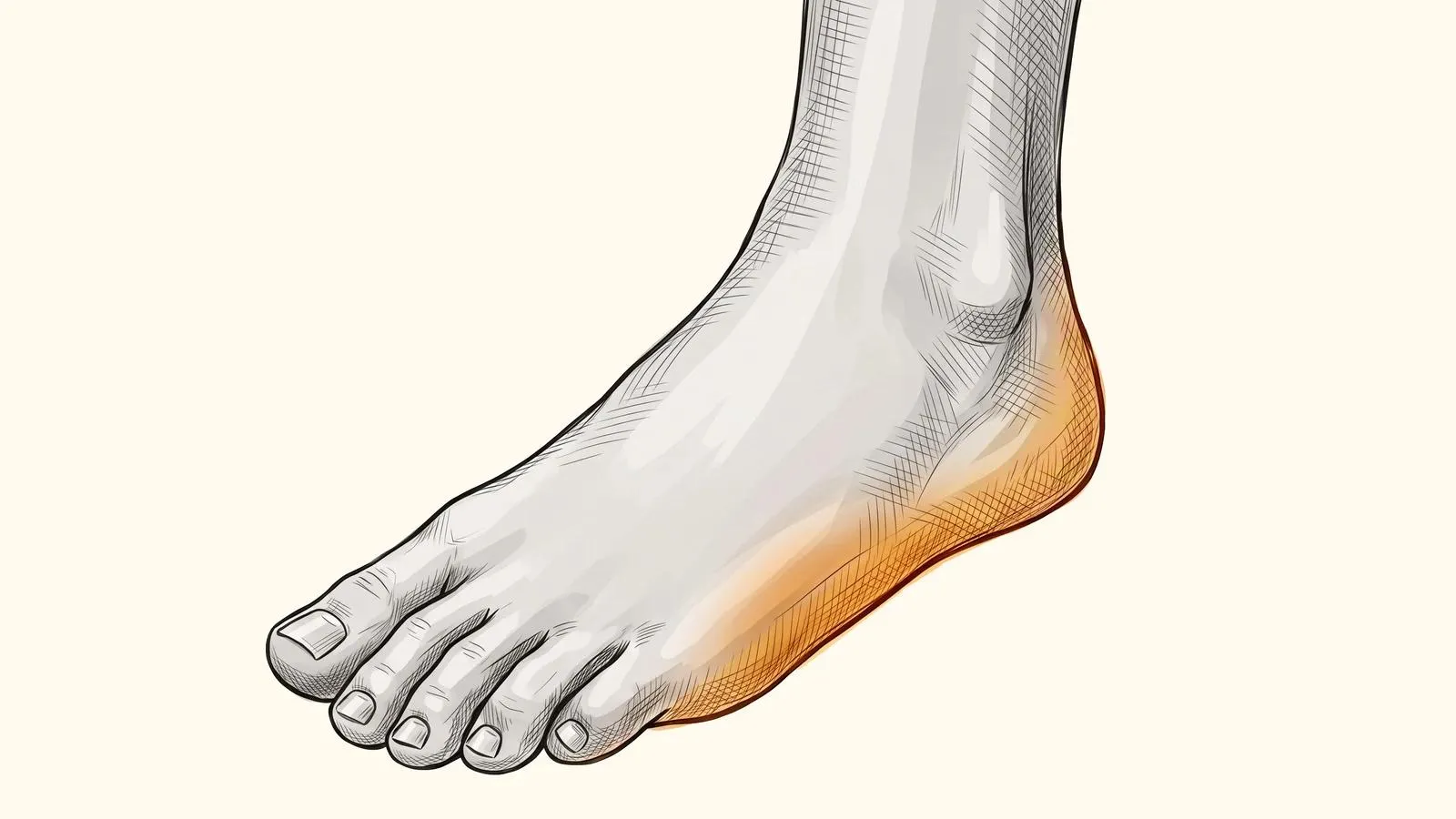
While arch and heel pain are commonly discussed in podiatry, pain on the outer edge of the foot is much less well known: despite being equally painful and frustrating for our patients.
To help those experiencing pain on the outer border of the foot, the podiatrists at Masterton Foot Clinic are sharing some of the many causes we see and treat. Getting the diagnosis right is important, because pain in this area can come from bones, joints, tendons, nerves or even the skin: and the treatment differs considerably depending on the cause.
Peroneal tendonitis
The peroneal, also known as fibularis, tendons run down the outside of your lower leg, around the outer ankle and into the foot. These tendons help stabilise the foot and ankle and play an important role during walking, running and sport.
Although peroneal tendonitis is the term many people search for, we now more commonly use the term peroneal tendinopathy for persistent tendon pain. This is because the problem isn't necessarily simply inflammation. Symptoms can develop when the load placed through the tendon exceeds the tendon's current ability to tolerate it. This may follow an ankle sprain, a sudden increase in walking or running, or develop gradually through repeated loading.
Pain is often felt behind or below the ‘bony bump’ on the outside of the ankle and sometimes further along the outside of the foot. It may be aggravated by walking, running, uneven ground or movements that load the peroneal tendons.
Treatment usually involves identifying and temporarily modifying the aggravating loads, addressing footwear and other contributing factors where relevant, and progressively strengthening the tendon and surrounding muscles to restore their ability to tolerate activity.
Iselin’s
Iselin’s disease affects growing children and adolescents. It is a traction apophysitis, irritation of the growth area at the base of the fifth metatarsal, which is the bony prominence you can feel on the outside of the midfoot.
The peroneus brevis tendon attaches in this region, and repeated traction through this attachment during running, jumping, and sport can irritate the developing growth area. Children typically describe pain and tenderness directly over the bony prominence, often worsening with activity.
Iselin’s is sometimes mistaken for a fracture because both can cause pain around the base of the fifth metatarsal. The history, examination and, where required, appropriate imaging can help distinguish between them.
The good news is that Iselin’s can usually be managed successfully. Treatment may include temporarily modifying aggravating sporting activities, appropriate footwear, addressing contributing factors and gradually returning to full activity as symptoms settle and the area becomes better able to tolerate load.
Stress or avulsion fracture
Bone stress injuries occur when repeated loading exceeds the bone’s ability to recover and adapt. This can begin as a bone stress reaction and, if excessive loading continues, may progress to a stress fracture.
Pain from a bone stress injury often develops gradually. It may initially feel like a niggle or dull ache during activity before becoming increasingly localised and persistent. Early bone stress injuries may not always be visible on an X-ray, so further imaging may sometimes be required if clinical suspicion remains high.
In avulsion fractures, a small piece of bone is pulled away from the main bone by forces from an attached tendon or ligament. A common site in the foot is the tuberosity at the base of the fifth metatarsal, the bony bump you can feel along the outer border of your foot. These injuries commonly occur when the foot suddenly rolls inwards and can occur alongside an ankle sprain.
Importantly, an avulsion fracture at the base of the fifth metatarsal is not the same as a Jones fracture. A Jones fracture occurs slightly further along the fifth metatarsal and has different healing characteristics, so accurately identifying the fracture type is important.
Cuboid syndrome
Cuboid syndrome is a possible cause of pain around the outer midfoot, particularly after an ankle sprain or repetitive loading.
It has traditionally been described as the cuboid bone moving slightly “out of place”. A more accurate description is a subtle disturbance in the movement or function of the joint around the cuboid, particularly the calcaneocuboid joint. The exact mechanism isn't fully understood, and no single scan or clinical test definitively diagnoses cuboid syndrome.
Pain is usually felt around the cuboid on the outside of the midfoot and may be aggravated by walking, running, pushing off the foot or walking over uneven ground.
Because several other conditions, including fifth metatarsal fractures, peroneal tendon problems and other midfoot injuries, can cause pain in the same area, these need to be considered before diagnosing cuboid syndrome.
Where cuboid syndrome is considered the likely cause, treatment may include hands-on mobilisation of the affected joint, strapping or padding, footwear advice and exercises to restore comfortable movement and function.
Tailor’s bunion
Much like a bunion at the big toe, a tailor’s bunion, sometimes called a bunionette, is a prominence around the joint at the base of the fifth toe on the outside of the foot.
A tailor’s bunion may not initially cause any pain or symptoms aside from the changing shape of the joint. For some people, however, the prominence becomes irritated by footwear or increased pressure. This can lead to pain, redness, corns, or calluses in the area and make comfortable footwear more difficult to find.
Treatment depends on the symptoms and may include changes to footwear, reducing pressure around the prominent joint, treating associated corns or calluses, and, where appropriate, using foot orthoses or other offloading strategies. Surgery may be considered for persistent, significant symptoms when conservative measures have not provided sufficient relief.
Arthritis
Arthritis can affect many of the joints in the foot, including those along the outer edge.
Osteoarthritis involves changes throughout the joint, including the cartilage and underlying bone. Rather than simply being “wear and tear”, it is a joint condition influenced by factors such as age, previous injury, joint loading, and individual susceptibility. Although commonly associated with larger joints, osteoarthritis can also affect the smaller joints of the foot, causing pain, stiffness, and swelling.
Rheumatoid arthritis is an autoimmune inflammatory condition in which the immune system mistakenly attacks the lining of the joints. The feet are commonly affected, and symptoms can include pain, swelling, stiffness and changes in joint shape.
Other types of inflammatory arthritis, including gout and psoriatic arthritis, can also cause foot pain. Persistent joint swelling, warmth, stiffness or pain involving several joints warrants appropriate assessment.
Tarsal coalition
A tarsal coalition occurs when two or more bones in the back or middle of the foot have an abnormal connection. The connection may be made of fibrous tissue, cartilage or bone.
Tarsal coalitions are usually present from birth, although symptoms often don't appear until later childhood or adolescence as the skeleton matures. Some people have a coalition and never develop symptoms.
When symptoms do occur, the foot may feel stiff or painful, particularly during physical activity. Some people experience repeated ankle sprains or notice that the foot has less side-to-side movement than expected.
Treatment depends on the type of coalition and the severity of symptoms. Activity modification, footwear, orthoses, rehabilitation and temporary immobilisation may all have a role. Persistent or severe cases may require an orthopaedic opinion.
Sinus tarsi syndrome
The sinus tarsi is a small anatomical space on the outside of the foot between the talus and calcaneus bones, just in front of and below the outer ankle.
Pain in this area can develop following an ankle sprain and may also be associated with ongoing instability or irritation of structures around the subtalar joint. People often describe pain or tenderness between the outer ankle and heel, sometimes accompanied by a feeling of instability, particularly when walking on uneven ground.
If you’ve had repeated ankle sprains and continue to experience pain in this area, it is worth having the ankle properly assessed. Treatment should address not only the painful area but also any ongoing ankle instability, strength or balance deficits that may be contributing.
Corns, calluses or friction
Repeated pressure or friction on the outside of the foot can lead to corns and calluses. These may develop around prominent joints, on the sides or between the toes, or beneath areas that experience increased pressure.
A corn is a concentrated area of thickened skin and can sometimes feel as though you're walking on a small pebble. Callus tends to be more spread out but can also become uncomfortable when it becomes particularly thick.
Your podiatrist can safely remove painful corns and reduce callus, often providing immediate relief. Just as importantly, we look at why the pressure has developed in the first place. Footwear changes, padding, toe devices, or foot orthoses may sometimes be used to reduce pressure and help prevent the problem from returning quickly.
Experiencing burning, pins and needles, or numbness? Consider diabetes
Burning, pins and needles, tingling, shooting pain or numbness can indicate that a nerve may be involved rather than the problem coming solely from a bone, joint or tendon.
There are many potential causes. These include local nerve irritation or entrapment in the foot or ankle, problems originating further up the leg or from the lower back, and peripheral neuropathy.
Diabetes is one important cause of peripheral neuropathy, particularly when symptoms affect both feet, but it is not the only cause. Vitamin deficiencies, some medications, alcohol use and a range of neurological and medical conditions can also affect peripheral nerves.
If you have diabetes and develop new numbness, burning or altered sensation in your feet, having this assessed is particularly important because reduced sensation can increase the risk of unnoticed wounds and other foot complications. New, persistent or worsening nerve symptoms should also be assessed even if you don't have diabetes.
Yes, there are many causes of outer foot pain!
If there’s one thing that’s for sure, it’s that there are a lot of causes of pain along the outer edge of the foot, many more than we’ve listed here today.
Other possibilities include ankle ligament injuries, peroneal tendon problems, sural nerve irritation, os peroneum problems, fractures elsewhere in the foot, inflammatory conditions, and pain referred from other areas.
While it’s useful to start understanding what the problem could be, it’s more important to get the diagnosis right so you can implement the appropriate treatment.
Too often we see people trying to treat what they assume is causing their pain when the problem is actually something different. A proper assessment can identify which structures are involved, what may have contributed to the problem and what needs to happen to get you comfortably back to your normal activities.
To book your appointment with our experienced podiatry team here in the Wairarapa, call us on 06 370 4057 or book online.