

Fungal Toenails: Causes, Symptoms, Treatment & Prevention
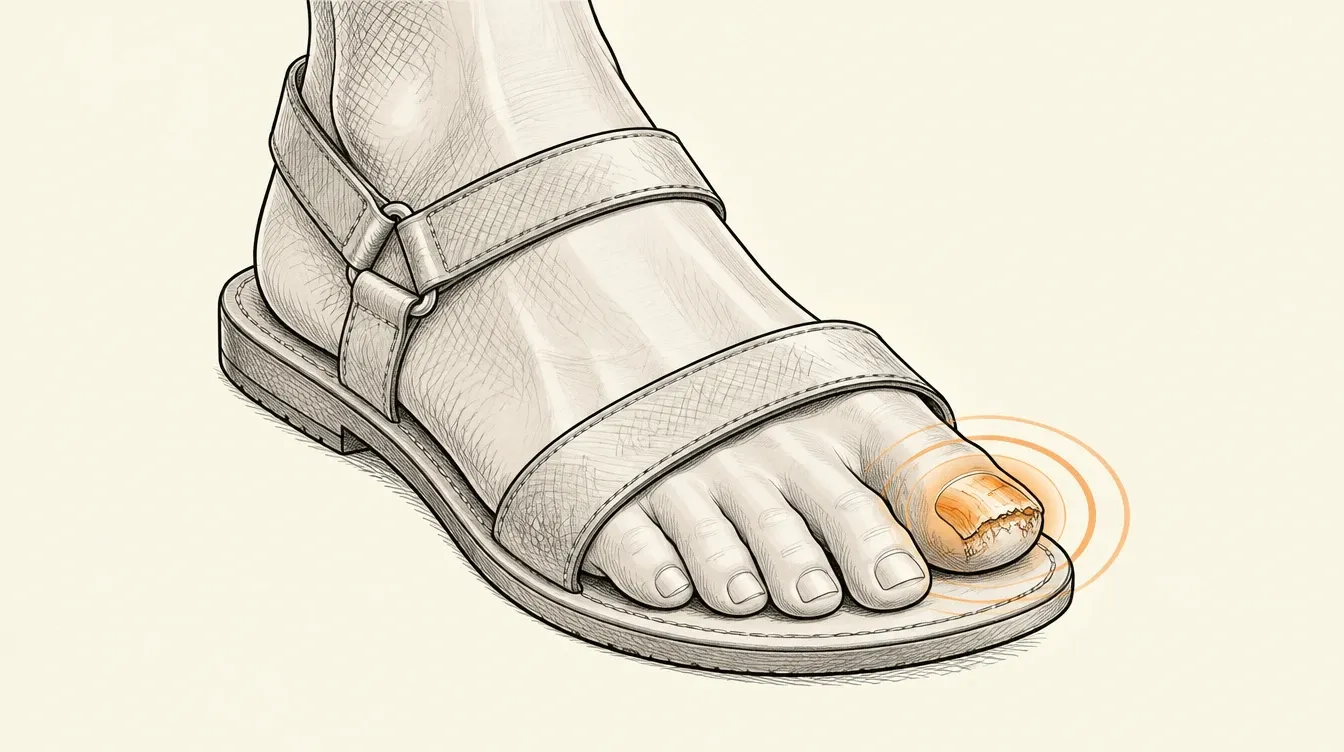
Every spring we start hearing a familiar story in the clinic. The feet have been hidden away in shoes and socks all winter, then September and October arrive, the sandals come out – and so do the toes.
People look down at a thick, yellow or damaged toenail and think: “That doesn’t look great – I really should do something about it.”
Not surprisingly, this is when we start to see an increase in the number of people seeking help for fungal nails.
Fungal nail infections are extremely common. They can leave toenails yellow or white, thickened, brittle, crumbly or lifting away from the skin underneath. The good news is that they can be treated. The important part is making sure it is actually fungus first, and then choosing a treatment appropriate to the extent of the infection.
What causes fungal toenails?
A fungal nail infection – medically known as onychomycosis – occurs when fungi infect the nail plate or the tissues beneath it.
Fungi thrive in warm, moist environments, which is why fungal nail infections often occur alongside Athlete’s foot (tinea pedis). Sweaty feet, enclosed footwear, communal changing areas and repeated minor trauma to the nail can all contribute.
Once established, fungal nail infections can be stubborn. Toenails also grow slowly, so even after successful treatment, it takes time for the damaged nail to grow out.
Is my thick or yellow toenail actually fungal?
This is important because not every thick, yellow or damaged toenail has a fungal infection.
Repeated footwear trauma, ageing, psoriasis and previous nail injuries can all produce nails that look remarkably similar.
At Masterton Foot Clinic, we start by assessing the nail rather than simply assuming that discolouration means fungus. Where the diagnosis isn’t clear, a nail sample can be tested to help confirm whether fungus is present.
There’s little point spending months treating a fungal infection if fungus wasn’t the problem in the first place.
How do you treat fungal toenails?
There isn’t one treatment that’s right for everybody. Treatment depends on how much of the nail is affected, how many nails are involved, your general health and what you’ve already tried.
Options include topical antifungal treatments, prescription oral antifungal medication through your doctor, and laser-based treatments.
Topical treatments can be useful, particularly for relatively limited infections, but require consistent application over a long period and can struggle when a nail is very thick or extensively involved.
Prescription oral antifungals such as terbinafine can be effective, but aren’t suitable for everyone. Your GP needs to consider your medical history, other medications and potential adverse effects before prescribing them.
Our approach to fungal nails
At Masterton Foot Clinic, we take a slightly different approach because treating the fungus is only one part of the problem.
First, we establish whether the nail changes are actually consistent with fungal infection. Testing can be arranged where necessary.
Second, we reduce the affected nail. Thickened and damaged nail can be carefully cut back and reduced using a podiatry burr. This reduces some of the bulk and pressure and gives us a better starting point for treatment.
Third, where appropriate, we can use Lunula cold laser treatment. Unlike lasers that rely on heating the nail, Lunula uses two low-level laser wavelengths and doesn’t generate significant heat. Treatment is painless and doesn’t require anaesthetic or recovery time.
We’ve been using Lunula at Masterton Foot Clinic since 2016, so we now have more than 10 years’ experience using it as part of our fungal nail treatment programme.
Lunula can be particularly appealing to people who have struggled with topical treatments, don’t want to take oral medication, or for whom oral antifungal medication isn’t appropriate.
Importantly, no fungal nail treatment works for everybody, and laser isn’t a guaranteed cure. We’ll discuss the options and recommend an approach based on your individual nails and circumstances.
Preventing your fungal nail from coming back
Treating the nail without addressing the environment around it can increase the chance of reinfection.
If you also have Athlete’s foot, that needs to be treated because the skin can act as a reservoir for fungus. Keeping your feet dry, changing damp socks, allowing footwear to dry properly and avoiding sharing nail clippers or footwear can also help.
We’ll talk you through the practical things you can do at home so you’re not simply treating the nail and then repeatedly exposing it to the same problem.
How long does a fungal toenail take to clear?
This is where expectations matter.
We aren’t trying to magically turn the existing damaged nail clear again. The goal is for healthier nail to grow forward from the base as the affected nail gradually grows out.
Toenails grow slowly, particularly the big toenail, so visible improvement takes months rather than weeks. A severely affected big toenail may take a year or longer to completely grow out.
That’s why we look for progress from the base of the nail, rather than focusing only on the damaged nail remaining at the end.
When should I see a podiatrist about a fungal nail?
It’s worth having your nail assessed if it’s becoming yellow, white, thickened, crumbly or distorted; if several nails are affected; if pharmacy treatment hasn’t worked; or if you’re simply unsure whether you’re dealing with fungus.
It’s particularly important to seek advice rather than treating the nail yourself if you have diabetes, reduced circulation or reduced sensation in your feet.
At Masterton Foot Clinic, we can assess the nail, reduce thickened or damaged nail where required, arrange testing where appropriate and talk you through the treatment options – including Lunula cold laser treatment.
The earlier we establish what is actually causing the nail changes, the sooner we can put the right plan in place.
To book an appointment with our podiatry team here in the Wairarapa, call us on 06 370 4057 or book online.